
Hardwood vs softwood logs: which should you buy?
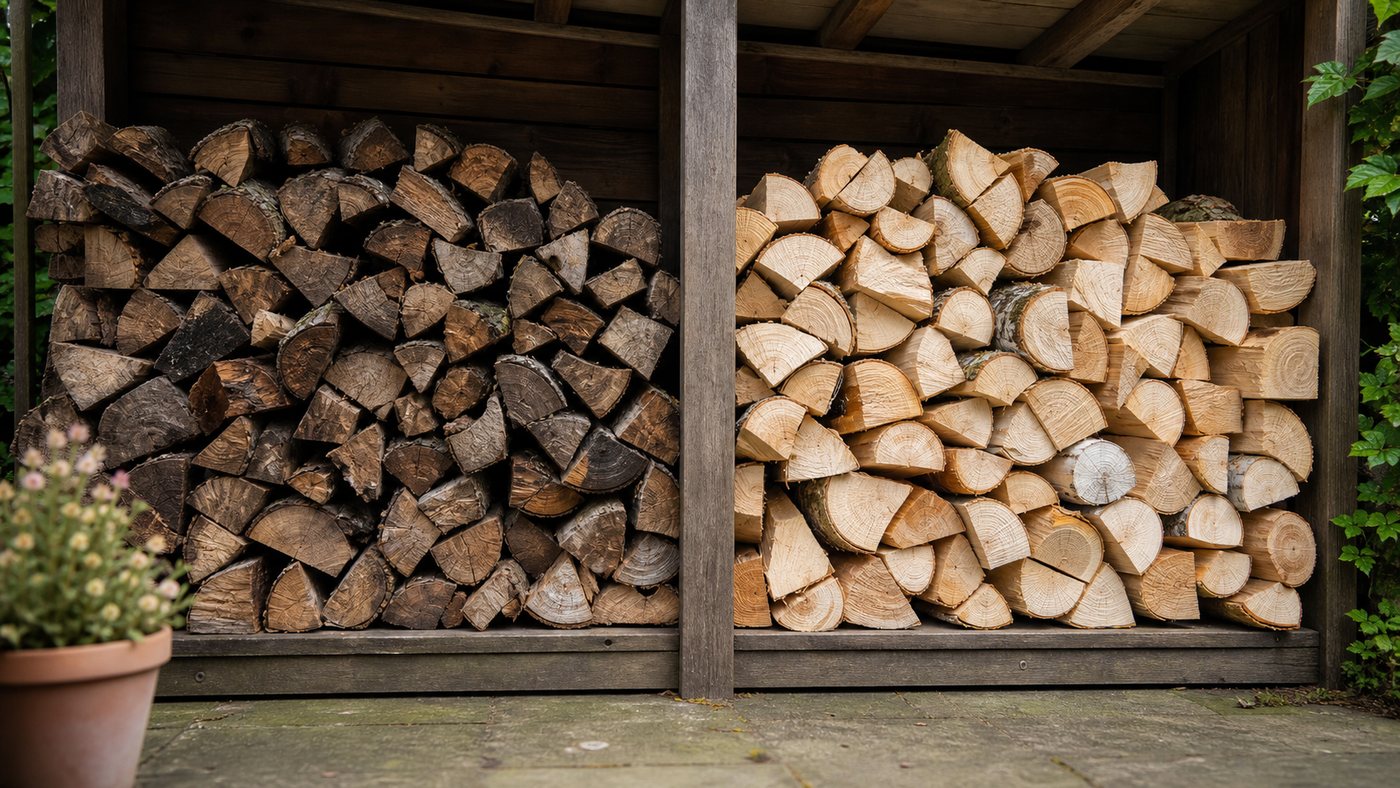
The best firewood choice is not always the most expensive bag. Hardwood and softwood behave differently, and the right option depends on your stove, how often you burn, and what local suppliers deliver.
Hardwood logs
Hardwood usually comes from slower-growing trees such as ash, oak, beech and birch. It tends to be denser, so a good dry hardwood log often burns longer and gives steady heat. That makes it popular for stove owners who want an evening fire without constantly reloading.
The trade-off is price. Hardwood is often sold at a premium, and two suppliers can use the same phrase, such as “bulk bag”, while delivering very different volumes. That is why bag size, delivery cost and moisture level matter as much as the headline price.
Softwood logs
Softwood usually lights quickly and can give a lively flame. It is often cheaper and can be useful for kindling, quick heat, or daytime use when you do not need a long slow burn. Dry softwood can be perfectly usable in many modern appliances, provided it is properly seasoned or kiln dried.
The main thing to avoid is wet wood. Wet logs waste heat boiling off moisture, smoke more, blacken glass and can contribute to deposits in the flue.
How to compare value
- Check whether the price is for a net, barrow bag, builders bag, crate, loose cubic metre or other size.
- Ask whether delivery is included and whether there is a minimum order.
- Look for moisture content or Ready to Burn information.
- Read Google reviews for delivery reliability, not just star rating.
For many households, dry mixed hardwood is a safe default. But a good local softwood supplier may still be better value than a vague hardwood listing with unclear bag sizes.